Controversial Chinese scientist gives idea that can stop humans from ageing
Chinese scientist He Jiankui claimed to stop humans ageing process by modifying their embryos


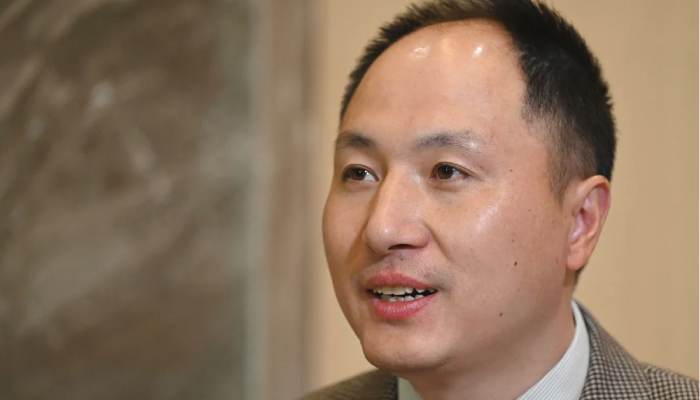
Controversial Chinese scientist gives idea that can stop humans from ageing
Unpopular Chinese scientist, He Jiankui, after revealing in 2018 that he has produced first gene-modified offspring claimed to have proposed a fresh idea to modify human embryos that might help people avoid ageing.
Jiankui spent three years in jail in China for engaging in illegal medical procedures. He shocked the medical community by revealing on social media that he was building a research centre in Beijing after reemerging last year.
Since then, his research has concentrated on using gene therapy to cure rare disorders.
Experts claim that his current research plan, which has stirred up controversy once more, is a repeat of his prior work.
His work was questioned and viewed as unethical and risky because it could have an effect on future generations' genetic makeup.
His proposal, which was very brief, stated that his research would entail gene-editing mouse embryos and later zygotes, or human oocytes, to see whether a mutation "confers protection against Alzheimer's disease."
The Chinese scientist wrote, stressing the strain of a rapidly ageing population on the nation: "The ageing population is of grave importance as both a socioeconomic issue and a strain on the medical system … Currently, there is no effective drug for Alzheimer’s disease."
His upcoming experiment will use fertilised egg cells that are not suitable for implantation into a woman.
The proposal noted: "No human embryo would be implanted for pregnancy and government permit and ethical approval were required before experimentation."
His plan is considered scientifically flawed by experts.
The Chinese government took action to control gene editing and the moral issues surrounding it after citing his study.
According to allegations in the Chinese media, he was restricted in his use of human genetic resources and prohibited from working in the field of reproductive technology services.
Associate professor Peter Dröge of Singapore's Nanyang Technological University described the situation as "bluntly insane."
"Apart from ethical considerations, gene-editing an embryo to address a complex disease that affects people toward the end of their life and doesn't have a clear, single genetic cause is highly questionable," he said.
"He basically wants to genetically modify the human species so they don't get Alzheimer's," he said.
"I'm really surprised that he's coming forward with this again."